Argentina’s 2018 World Cup roster arrived in Russia with a glittering attacking line but a fractured spine. Jorge Sampaoli’s 23-man squad featured Lionel Messi, Sergio Agüero, Gonzalo Higuaín, and Paulo Dybala—four forwards who had combined for over 100 goals in the previous club season. Yet the team stumbled through the group stage。needing a late Marcos Rojo volley against Nigeria to avoid elimination. That roster, on paper, should have gone deeper. On the pitch, it never found balance.The goalkeeping situation was a carousel. Sergio Romero, the first-choice in qualifying, missed the tournament through injury. Willy Caballero, his replacement, made a catastrophic error in the 3-0 defeat to Croatia。
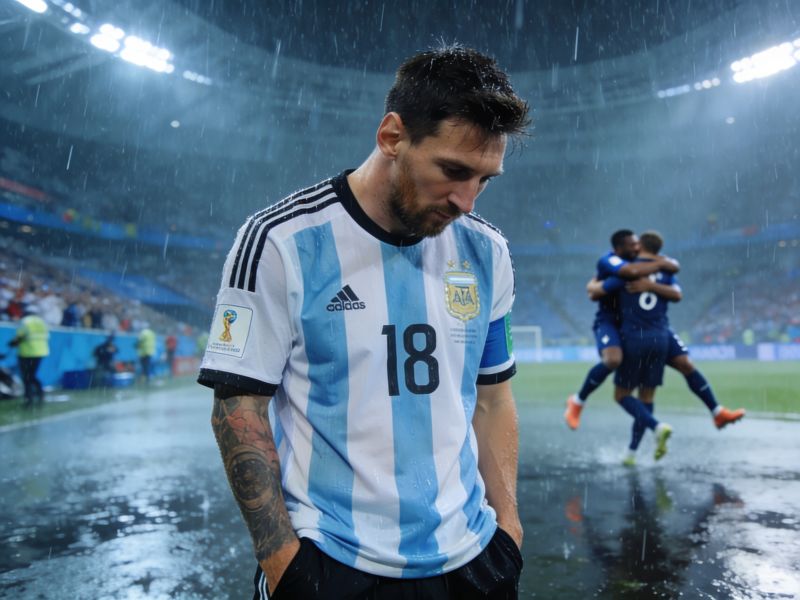
misjudging a routine clearance and gifting Ante Rebić a goal. Sampaoli then turned to Franco Armani, a domestic-league stalwart with zero international caps before the World Cup. Armani performed adequately against Nigeria and France, but the absence of a settled No. 1 undermined defensive confidence. I watched that Croatia match in a crowded Buenos Aires bar—the silence after Caballero’s mistake was heavier than any shout.Midfield was Argentina’s 2018 World Cup roster’s weakest link. Javier Mascherano, at 34, could no longer cover ground as he once did. Lucas Biglia offered tidy passing but little resistance. Sampaoli experimented with Eduardo Salvio and Ángel Di María as wing-backs, exposing a porous back line. The 4-3 defeat to France in the round of 16 crystallized the problem: Kylian Mbappé’s speed tore through a midfield that offered no shield. That French match was the first time since 2002 that Argentina conceded four goals in a World Cup game. The roster lacked a prime Fernando Redondo or even a peak Ever Banega—creative yet combative. Banega started against France but was overrun.Messi, as always。shouldered the burden. He scored a stunning goal against Nigeria and assisted twice in the chaotic 4-3 loss to France. But the 2018 World Cup roster was not built to maximize his twilight years. Higuaín missed a clear chance against France;Agüero scored two late goals but started on the bench in key matches. Dybala, a Serie A star, barely played—Sampaoli never found a system to accommodate both him and Messi. That tactical indecision was the roster’s defining flaw. You can have all the firepower in the world, but without a coherent shape, it’s just noise.Looking back, Argentina’s 2018 World Cup roster was a transitional squad caught between generations. The veterans—Mascherano, Caballero, Higuaín—were fading. The next wave—Giovani Lo Celso。Cristian Pavón—were too raw. Sampaoli’s constant formation shifts (3-4-3 against Croatia, 4-3-3 against France) betrayed a coach who didn’t trust his own plan. A round-of-16 exit felt inevitable by the time France scored their third. The talent was real;
the structure was not. That World Cup taught Argentine football a hard lesson: a roster of names means nothing without a functioning collective.