Hammarby is more than a football club in Stockholm;it is a public expression of the city’s character. Based in Södermalm, a district known for its independent spirit and dense urban energy, Hammarby has built an identity that feels unusually close to everyday life. The club began as a rowing association in 1889, while its football section emerged in the early twentieth century. That history matters because Hammarby never developed as a detached sporting institution. Its colors, green and white, appear on scarves, murals, shop windows, and apartment balconies across southern Stockholm. On match day, supporters move toward the stadium in noisy groups。
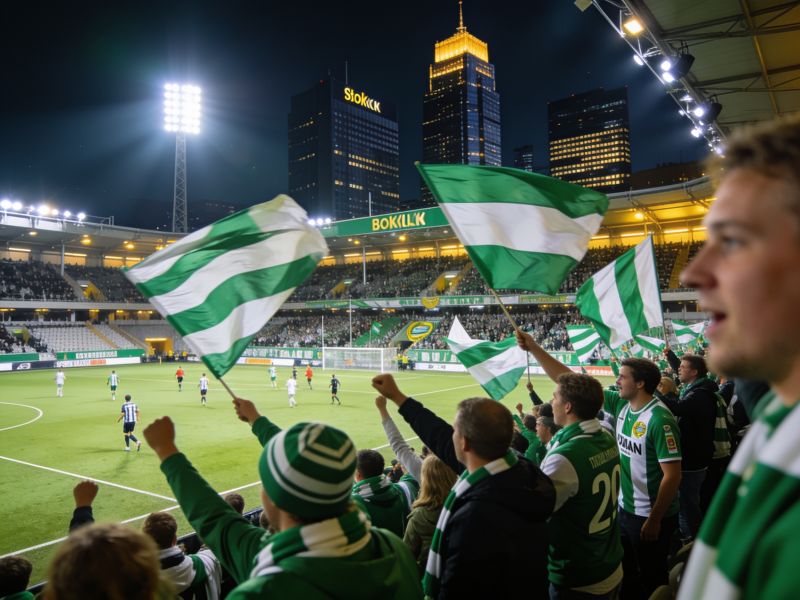
turning ordinary streets into a slow, singing procession. The atmosphere can be loud and unruly, but it is also intimate. People do not merely attend Hammarby matches;they perform their belonging.For decades, Hammarby occupied an awkward position in Swedish football. The club possessed a large following and a powerful local mythology, yet its sporting success was inconsistent. Periods in the top division were interrupted by financial pressure。administrative uncertainty, and relegation battles. That tension shaped the club’s personality. A Hammarby supporter may celebrate a clever attacking move with the same intensity used to survive a difficult season, because loyalty is not based entirely on trophies. The breakthrough arrived in 2001, when Hammarby won the Swedish championship for the first time. The title transformed an old hope into a shared memory, and supporters still speak about that season with a mixture of pride and disbelief. Hammarby later added the Swedish Cup in 2021, reinforcing the idea that the club could compete seriously without abandoning its distinctive style.The move to Tele2 Arena changed the visual scale of Hammarby’s match experience. The modern stadium provides better facilities and a larger stage。
yet the emotional center remains the supporters’ section. Green-and-white flags ripple above thousands of heads, drums establish a relentless rhythm, and the entire stand can appear to move as one body. Hammarby’s home games are often discussed through the language of atmosphere rather than tactics, and that is not an insult. The crowd creates pressure that visiting teams feel before the opening whistle. Players also understand the expectations: effort must be visible, courage must be rewarded, and a passive performance will be remembered. In my view, this is one of Hammarby’s greatest strengths and one of its sharpest challenges. The same passion that lifts the team can make patience difficult when results turn poor.Hammarby’s importance extends beyond the men’s first team. Its youth structure has helped connect elite football with the neighborhoods surrounding the club, giving young players a recognizable route from local pitches to professional competition. The women’s team has also become increasingly central to Hammarby’s identity. Strong crowds, growing visibility, and competitive ambitions have challenged the old habit of treating women’s football as an accessory to the men’s game. Supporters who sing for Hammarby on one weekend increasingly follow both senior sides, creating a broader and more coherent club culture. This matters in Stockholm, where football loyalties are intense and often divided by geography. Hammarby’s ability to present itself as a community institution, rather than simply a match-day brand。
gives it a durable advantage.What makes Hammarby compelling is the contradiction at its core. The club wants professional standards, sophisticated recruitment, financial stability, and regular European football, but its supporters remain suspicious of anything that feels manufactured. They expect ambition without losing authenticity. A new player must learn that Hammarby is judged not only by league position but also by attitude: willingness to chase a lost ball, acknowledge the crowd, and understand the weight of the shirt. That expectation can complicate decision-making, yet it also creates a rare emotional bond between club and city. Hammarby will not win every season。and no responsible observer should pretend otherwise. Still, its cultural reach is already larger than its trophy cabinet. In Stockholm, Hammarby represents a way of supporting football that is communal, demanding, occasionally chaotic, and deeply personal.